
2026-08-21 ·
How Wildfire Ash Affects Roof Underlayment In East County
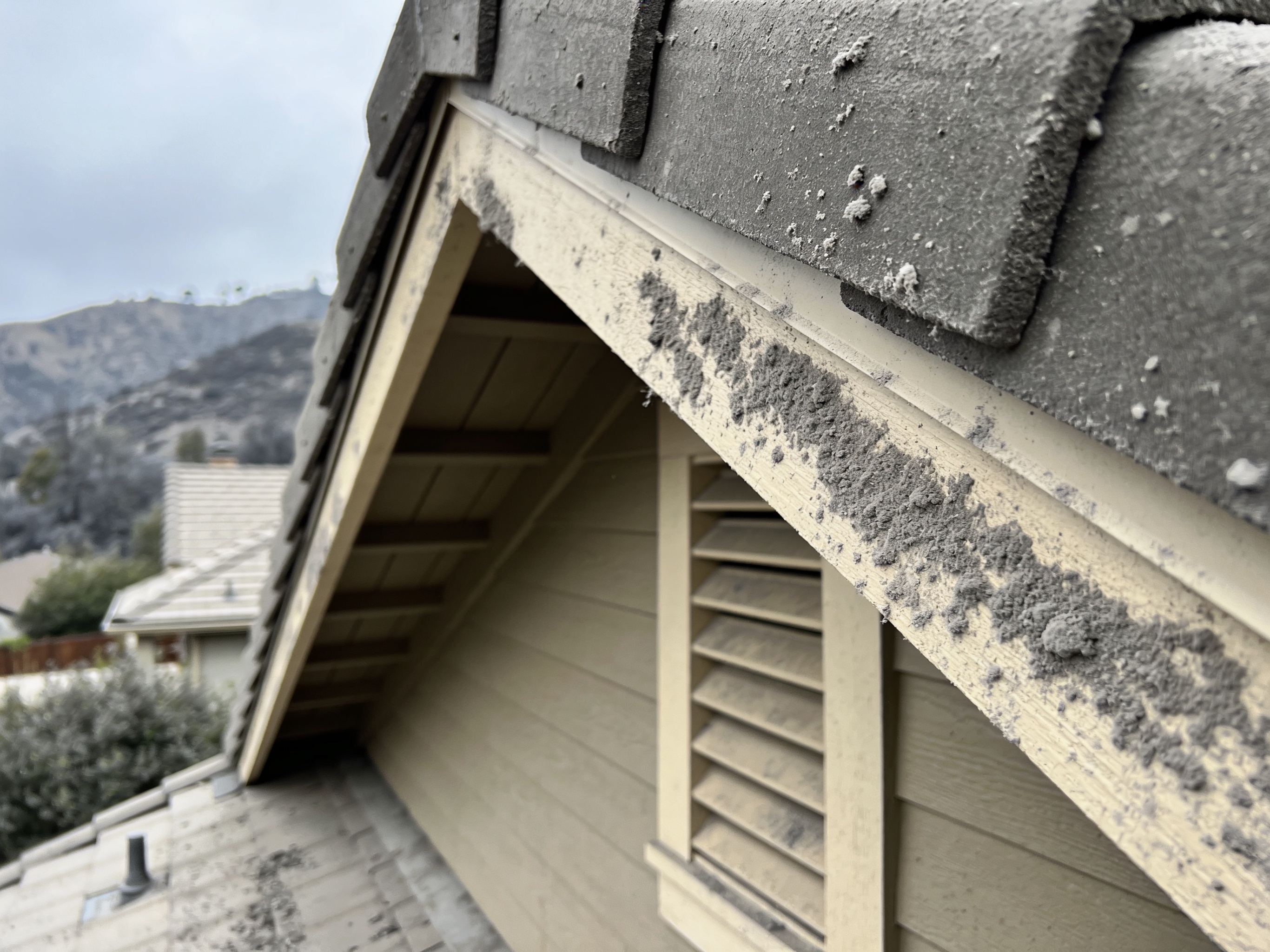
Wildfire ash accelerates underlayment failure in East County by depositing fine alkaline particles that raise pH levels and trap moisture against felt or synthetic membranes, often cutting service life in half within two fire seasons.
Ash Composition and Local Deposition Patterns
East County terrain funnels ash from inland burns into neighborhoods around La Mesa more readily than coastal zones like La Jolla or Pacific Beach. The mild Mediterranean climate keeps most ash dry for weeks, allowing wind to drive particles under tiles and shingles before the first rain arrives. Once moisture hits, the ash forms a mildly caustic slurry that sits against underlayment seams. Homes built in the 1960s and 1970s common in La Mesa often have older organic felt that absorbs this slurry faster than modern synthetics. Crews at 519 University Ave have documented heavier ash loads on east-facing slopes after regional fires compared with the flatter Mission Valley corridor.
How Ash Attacks Underlayment Layers
Alkaline ash first attacks the top surface of underlayment, breaking down the asphalt coating that protects the base fabric. Over repeated wetting and drying cycles typical of San Diego County winters, the material loses flexibility and develops micro-cracks. Synthetic underlayment holds up longer but still loses nail-holding strength where ash concentrates around valleys. In La Mesa homes with limited attic ventilation, trapped humidity keeps the ash damp longer, extending the chemical reaction window. This process differs from salt-air corrosion seen near the coast because ash residues remain after rain events rather than washing away completely.
Inspection and Early Intervention Steps
Schedule a roof inspection after any regional fire season to check for ash accumulation in valleys and around penetrations. Lift a few tiles or shingles on the east slope first, since that side receives the most fallout. Look for darkened streaks on the underlayment surface and powdery residue that does not rinse off with plain water. Document any softening around nail heads, as this indicates the start of delamination. If damage appears, tie the repair into scheduled maintenance rather than waiting for leaks. Homeowners in La Mesa and nearby areas can cross-reference findings with guidance in related posts on tree-sap debris effects to understand combined stressors.
Protection Measures for East County Roofs
After ash settles, a low-pressure rinse from the ridge downward removes most loose material before it embeds. Avoid high-pressure washing that forces particles deeper into seams. Once clean, verify that existing underlayment remains intact by checking for flexibility and uniform color. In older La Mesa stock, owners often schedule underlayment replacement during roof restoration projects rather than full replacement. Pairing this work with gutter cleaning prevents ash-laden water from backing up under eaves. Properties between La Mesa and Chula Vista benefit from the same sequence because prevailing winds carry ash across the same inland corridor.