
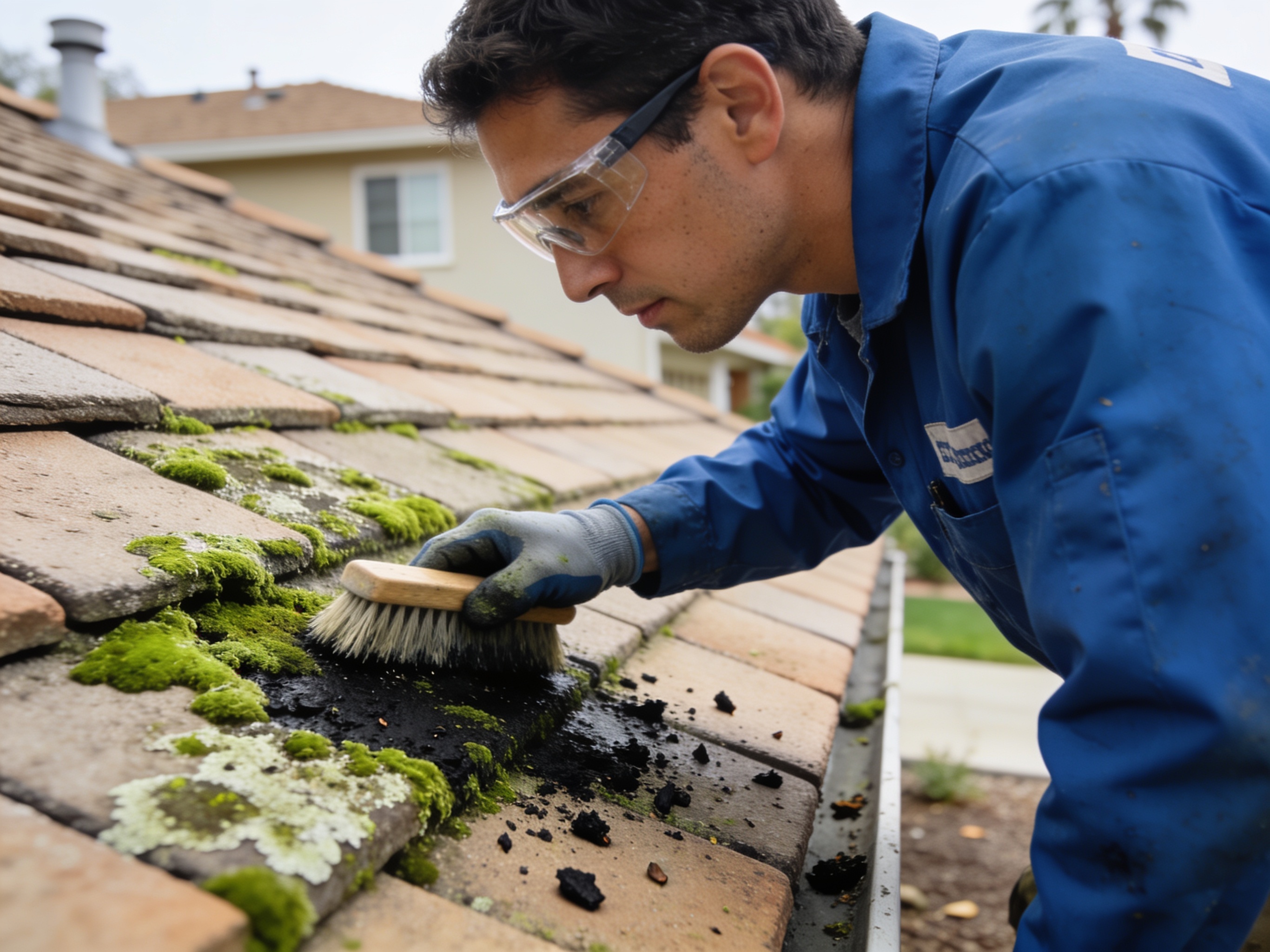
San Diego's mild Mediterranean climate keeps temperatures steady but allows persistent coastal fog and dew to settle on north-facing roof slopes, especially in older stock found in North Park and Mission Valley. This moisture fuels algae streaks and moss patches that trap water against shingles, accelerating granule loss and underlayment decay. Homeowners in La Jolla and Downtown San Diego often see growth first along eaves near mature trees or where Pacific winds carry salt-laden mist. Proper removal requires low-pressure washing combined with EPA-approved roof-safe biocides rather than household bleach that can corrode metal flashings common on Coronado and La Mesa homes.
Edge cases appear on tile roofs in Pacific Beach where salt air corrodes mortar joints, allowing moss to root deeper and lift tiles during the occasional winter rain. In San Diego County, building codes require that any treatment runoff be contained so it does not reach storm drains; crews must use containment booms and neutralizers on jobs near Balboa Park or the USS Midway Museum waterfront. Skipping these steps risks both code violations and damage to neighboring properties in dense areas like University Heights near our 519 University Ave base.
Seasonal timing matters because spring growth accelerates before summer heat dries surfaces. Treating too late leaves dead organic matter that stains light-colored shingles common in La Jolla Cove-view homes. Reapplication schedules depend on shade from nearby hills and proximity to the coast, with properties in Chula Vista needing attention more often than inland Mission Valley addresses.
Technician insight
In San Diego the thing that catches most people out with moss and algae removal is how quickly coastal fog in neighborhoods like Pacific Beach and La Jolla lets algae return on north slopes even after one treatment; older homes from the 1960s and 70s in North Park have thinner shingles that can be damaged if crews use anything stronger than low-pressure methods.
North Park bungalow with persistent north-slope algae
Homeowner noticed black streaks returning every winter on the shaded side. Inspection showed algae rooted under lifted granules along the eave facing the prevailing marine layer. We applied containment, treated with a roof-safe biocide, and rinsed at low pressure. Gutters were cleared and a residual spray applied; the roof stayed clear through the next foggy season.
Moss and Algae Removal Services We Offer
✓Shingle Moss Removal
Removes established moss mats from asphalt shingles without damaging granules, then applies residual treatment to slow regrowth in foggy coastal zones.
✓Algae Stain Treatment
Targets black algae streaks on composition roofs using gentle biocides that restore appearance while protecting against moisture trapped in San Diego's year-round dew.
✓Tile Roof Algae Cleaning
Cleans algae from concrete and clay tiles common in La Jolla and Coronado, clearing joints so water flows freely during winter rains.
✓Gutter and Eave Moss Clearing
Clears moss and debris from gutters and eaves in North Park and Pacific Beach homes to prevent backup that pushes water under roof edges.
✓Preventive Roof Biocide Application
Applies long-lasting zinc or copper-based treatments that inhibit new moss and algae on roofs in Mission Valley and Downtown San Diego.
Moss and Algae Removal Cost in San Diego, CA
| Service | Typical Range | What Affects It |
|---|---|---|
| Typical single-story home | $350–$650 | Increases with two-story access or heavy buildup in shaded La Jolla lots |
| Tile roof cleaning | $450–$800 | Higher when mortar joints require extra care near coastal salt air |
| Gutter and eave service add-on | $150–$300 | Common in North Park and Pacific Beach where trees drop debris year-round |
| Preventive biocide spray only | $200–$400 | Lower when performed during scheduled maintenance visits |
Ranges are typical for San Diego, CA and confirmed with an exact written quote before any work starts.
How it works
- 1
Site Assessment
Inspect roof slope, material, and growth density from ground and attic access points in the target neighborhood.
- 2
Containment Setup
Place tarps and booms to capture all rinse water before treatment begins.
- 3
Biocide Application And Agitation
Apply approved solution, allow dwell time, then gently remove growth with soft brushes or low-pressure rinse.
- 4
Final Rinse And Inspection
Neutralize surfaces, flush gutters, and verify no residue remains near storm drains.
Pricing
Cost depends on roof size, pitch, and growth severity; most San Diego homes fall in the mid-range.