
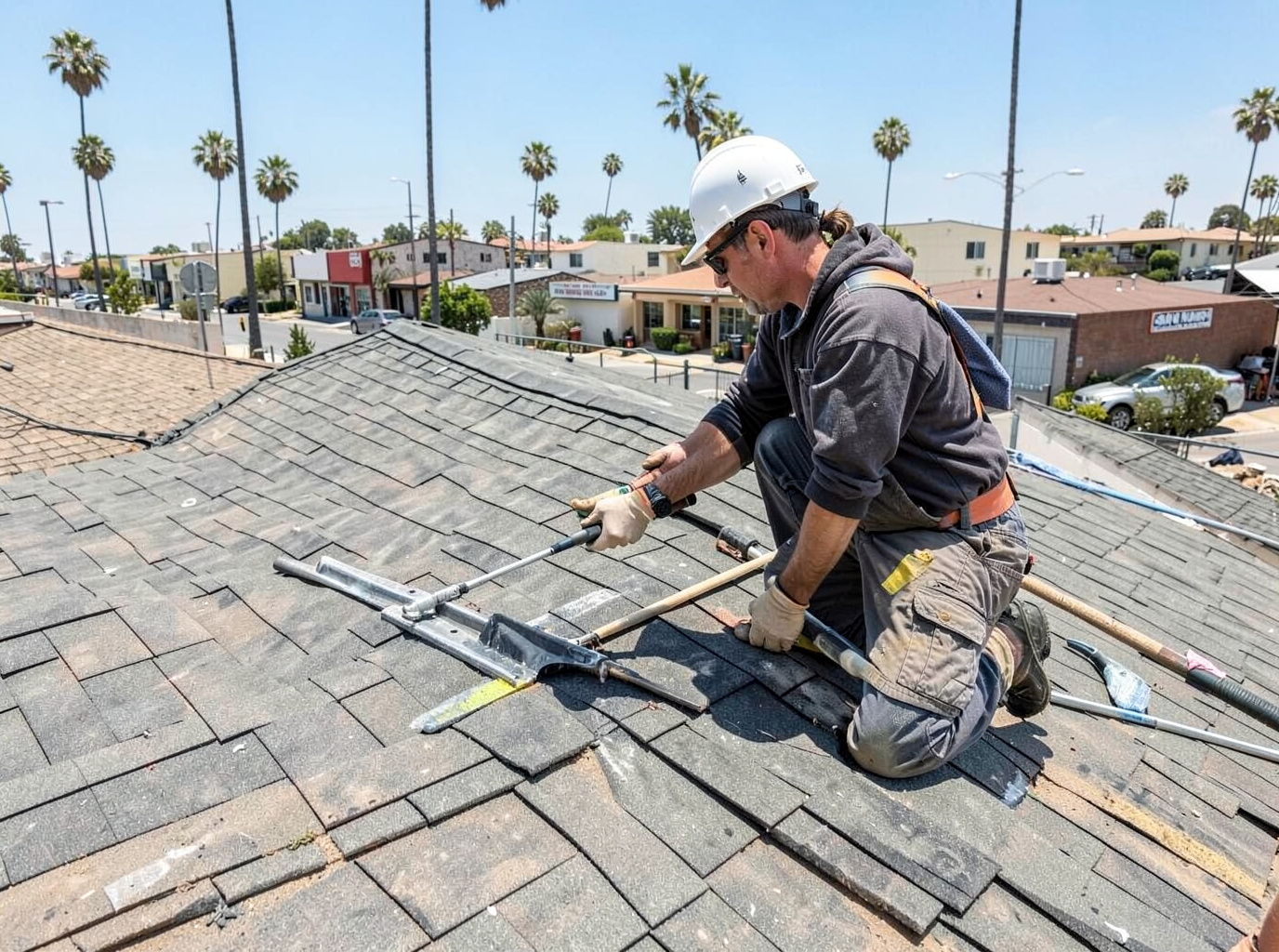
San Diego homes built before 1980 in neighborhoods such as North Park and La Mesa often carry original clay tile or built-up roofs that have reached the end of their service life. Salt air from the coast accelerates corrosion on metal flashings and fasteners, while the mild Mediterranean climate still delivers enough UV exposure to degrade asphalt shingles faster than inland counties. When replacing these roofs, crews must account for the added weight of new tile on older rafters and verify that underlayment meets current Title 24 energy requirements before the city issues a permit.
Mission Valley and Downtown San Diego properties frequently sit on flat or low-slope decks that demand different materials than the pitched tile roofs common in La Jolla or Pacific Beach. Homeowners replacing these systems must decide between modified bitumen, TPO, or PVC membranes that handle occasional heavy winter rains and ponding water. Proper cricket installation around HVAC curbs and skylights prevents the leaks that commonly appear after the first coastal storm of the season.
Coronado and Chula Vista homes near the bay face additional wind-driven rain exposure that requires upgraded drip edge and step flashing details. Replacement crews remove existing layers down to the deck, inspect for dry rot caused by prior leaks, and install new sheathing where needed before laying felt or synthetic underlayment. Local inspectors check for proper ventilation and ridge vent placement to keep attics dry year-round.
Every roof replacement in San Diego County begins with a site-specific assessment of pitch, existing layers, and proximity to landmarks such as Balboa Park or the USS Midway Museum, where access and staging can affect scheduling. Matching the new roof to neighborhood aesthetics while meeting current wind and fire ratings keeps projects on schedule and avoids re-inspection delays.
Technician insight
In San Diego, the thing that catches most people out with roof replacement is discovering dry rot along the eaves on 1960s and 1970s homes in North Park and La Mesa after we pull the old tile; the salt air hides the damage until tear-off, and fixing it changes both timeline and cost before the new roof goes on.
North Park Tile Replacement
Homeowner noticed water stains after winter rains. Inspection revealed failed underlayment and rotted fascia on a 1972 home. Crew removed three layers of tile, replaced damaged decking, installed new synthetic underlayment and Class 4 tile, then added ridge vent. Project passed inspection and stopped leaks ahead of the next coastal storm.
Roof Replacement Services We Offer
✓Tile Roof Replacement
Remove aging clay or concrete tile and install new Class 4 impact-rated tile matched to San Diego neighborhood standards with updated underlayment and flashings.
✓Asphalt Shingle Replacement
Strip multiple layers of old shingles and replace with architectural shingles rated for coastal UV and salt exposure on homes in La Mesa or North Park.
✓Flat Roof Replacement
Replace built-up or modified bitumen systems on Mission Valley and Downtown San Diego low-slope decks with TPO or PVC membranes and new drainage details.
✓Partial Roof Replacement
Replace damaged sections only on homes near La Jolla Cove or Pacific Beach where isolated wind or leak damage has occurred without affecting the entire roof.
✓Ridge Vent Installation During Replacement
Add continuous ridge ventilation while re-roofing to reduce attic heat and moisture in San Diego's mild but humid coastal climate.
Roof Replacement Cost in San Diego, CA
| Service | Typical Range | What Affects It |
|---|---|---|
| Asphalt Shingle Replacement | $6,500–$12,000 | Varies with square footage, pitch, and tear-off layers. |
| Tile Roof Replacement | $9,500–$18,000 | Higher for concrete vs clay tile and added underlayment upgrades. |
| Flat Roof Membrane Replacement | $7,000–$14,000 | Depends on square footage and membrane type selected. |
| Partial Section Replacement | $2,800–$5,500 | Limited to damaged areas; full inspection still required. |
Ranges are typical for San Diego, CA and confirmed with an exact written quote before any work starts.
How it works
- 1
Initial Inspection
Assess roof condition, layers, deck integrity, and ventilation on site in the specific neighborhood.
- 2
Material Selection
Choose tile, shingle, or membrane systems that meet local wind, fire, and Title 24 requirements.
- 3
Permit and Scheduling
Pull permits with the city and coordinate delivery and staging around coastal access limits.
- 4
Tear-Off and Deck Repair
Remove existing roofing, replace damaged sheathing, and install new underlayment and flashings.
- 5
Installation and Final Inspection
Apply new roofing, add ventilation, and schedule city inspection before cleanup.
Pricing
Pricing varies by roof size, pitch, material choice, and number of layers; upfront written quotes provided after inspection.