
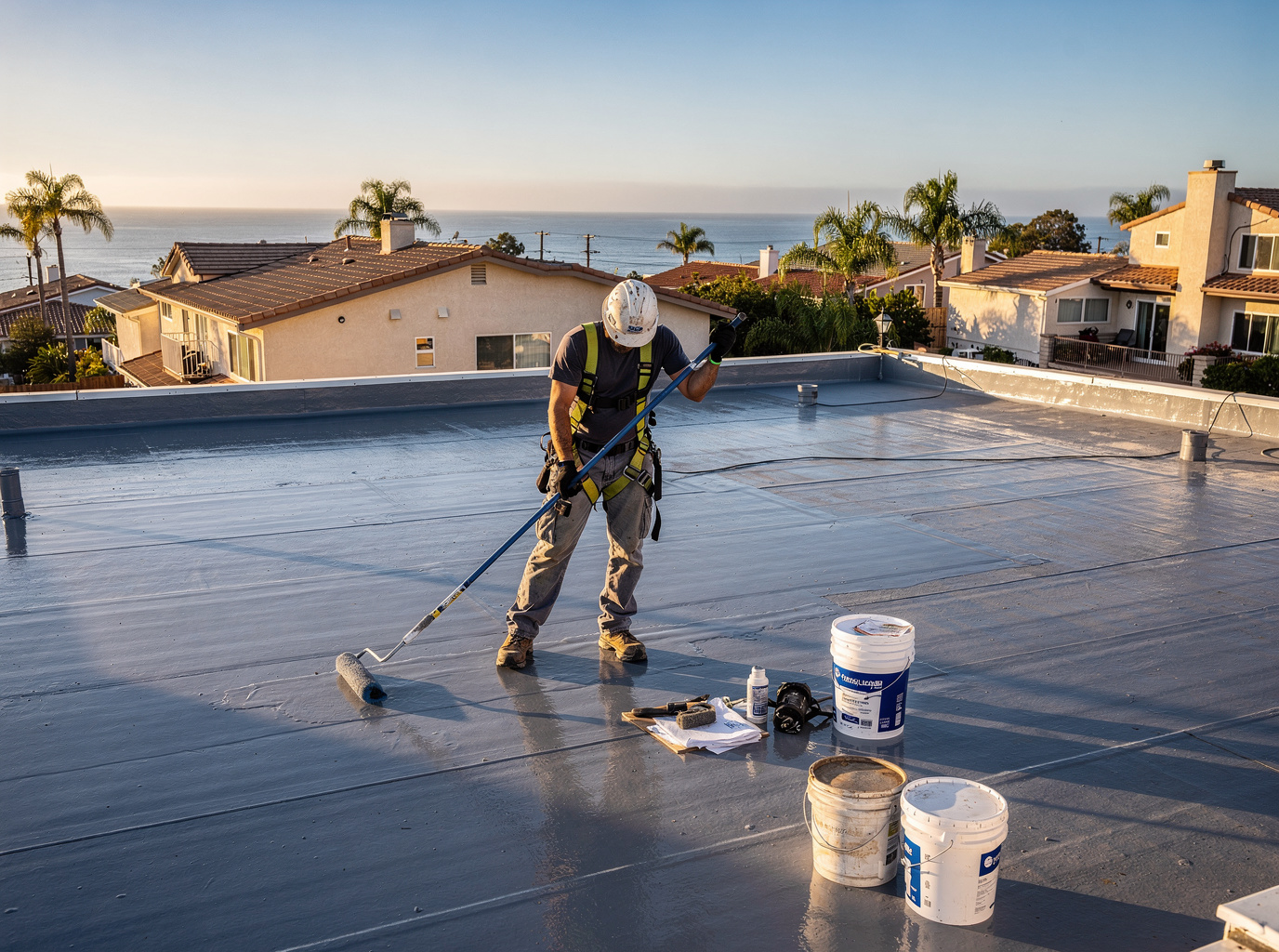
San Diego's mild coastal climate still brings salt air and winter rains that penetrate aging roofs on 1940s-1970s homes common in North Park and La Mesa. Proper waterproofing starts with identifying failed flashing around chimneys and skylights, then applying compatible elastomeric or liquid-applied membranes over existing surfaces. In areas like Mission Valley, where runoff from surrounding hills concentrates water, we pay extra attention to valleys and low-slope sections to prevent ponding that leads to leaks into living spaces below.
Homeowners in La Jolla and Pacific Beach often deal with tile roofs where underlayment has dried out after decades of UV exposure. We remove loose tiles, replace damaged felt with synthetic underlayment rated for high-wind coastal zones, then seal all laps and penetrations before reinstalling. This approach avoids full replacement while addressing the specific moisture intrusion points created by ocean breezes carrying salt that corrodes metal flashings faster than inland areas.
Code requirements in San Diego County emphasize proper drainage and wind uplift resistance, especially on exposed sites near Balboa Park or the USS Midway Museum waterfront. We verify existing slope and install additional crickets or tapered insulation where needed before the final waterproofing layer. Skipping these steps on flat sections common in commercial-adjacent residential properties in Coronado or Chula Vista leads to repeated callbacks during the first heavy rain event.
Edge cases include stucco walls meeting rooflines in Downtown San Diego high-rises converted to condos, where we integrate waterproofing with wall flashing to stop water tracking behind siding. Always test the system with a hose after curing rather than relying on visual inspection alone.
Technician insight
In San Diego, the thing that catches most people out with roof waterproofing is assuming the mild climate means less work on older tile roofs in North Park. Salt air from the coast corrodes the metal valleys and step flashings on 60-year-old homes faster than people expect, and skipping the underlayment upgrade means the new coating fails at the seams during the first winter rain.
Mission Valley Flat Roof Leak
Water was entering a low-slope addition on a 1970s home after heavy rain. We found failed lap seams and clogged scuppers allowing ponding. After cleaning, installing new tapered insulation and a reinforced liquid membrane system, the roof passed hose testing with no further intrusion.
Roof Waterproofing Services We Offer
✓Liquid Membrane Application
Seamless coating applied over existing roofs to seal hairline cracks common on older North Park homes before winter rains arrive.
✓Elastomeric Coating Installation
Reflective top coat that handles San Diego's UV and salt air while bridging small movements in flat sections found in Mission Valley properties.
✓Flashing and Seam Sealing
Targeted repair of metal flashings around vents and valleys that fail first due to coastal corrosion in La Jolla and Pacific Beach.
✓Tile Roof Underlayment Upgrade
Replacement of dried felt with synthetic material under existing tiles to stop leaks without full roof replacement on 1950s homes in La Mesa.
✓Low-Slope Drainage Waterproofing
Installation of tapered systems and reinforced membranes to eliminate ponding on commercial-adjacent roofs in Chula Vista and Coronado.
Roof Waterproofing Cost in San Diego, CA
| Service | Typical Range | What Affects It |
|---|---|---|
| Liquid membrane on 1,500 sq ft flat roof | $4,800–$8,200 | Varies with access difficulty in hilly La Jolla locations and number of penetrations |
| Tile roof flashing and underlayment repair | $2,900–$5,600 | Depends on extent of dried felt found in North Park and Mission Valley homes |
| Elastomeric coating over existing surface | $3,400–$6,100 | Price moves with roof pitch and whether additional drainage work is required |
Ranges are typical for San Diego, CA and confirmed with an exact written quote before any work starts.
How it works
- 1
Detailed Roof Assessment
We inspect every penetration, valley, and low point on your specific San Diego roof, noting tile condition in La Jolla or membrane wear in North Park.
- 2
Surface Preparation
Power washing and removal of failed coatings or loose material, followed by priming to ensure adhesion in the area's salt-laden air.
- 3
Membrane and Flashing Work
Application of liquid or sheet goods with reinforced seams at all transitions, paying special attention to wind-exposed edges near the coast.
- 4
Cure and Water Test
Allow full cure time then perform hose testing to verify no moisture reaches the deck before final walkthrough.
Pricing
Most roof waterproofing projects in San Diego range from a few thousand dollars for targeted sealing to mid-five figures when addressing entire low-slope sections on larger homes.