
2026-08-21 ·
Understanding Underlayment Choices For Coastal Tile Roofs
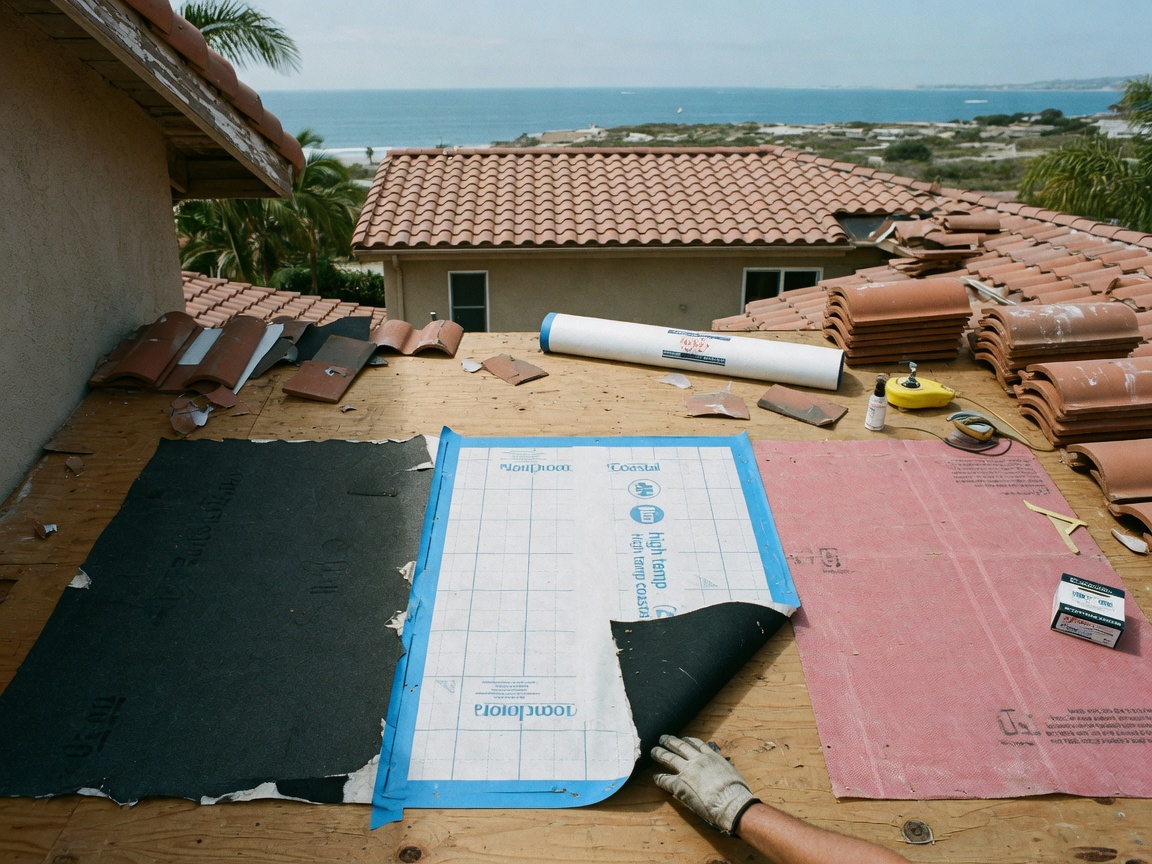
For coastal tile roofs in San Diego County, synthetic underlayment provides the strongest protection against salt air and moisture intrusion compared to traditional felt, with most options lasting 20–30 years when paired with concrete or clay tiles.
Types of Underlayment for Tile Roofs
Homeowners in La Jolla, Pacific Beach, and Mission Valley often choose between synthetic underlayment and felt underlayment beneath tile roofs. Synthetic sheets made from polypropylene or fiberglass weigh 2–4 pounds per square and resist tearing during high-wind events common near the coast. Felt paper, typically 30-pound weight, absorbs moisture more readily but costs less upfront. In areas with older housing stock built before 1980, such as North Park and Downtown San Diego, crews frequently encounter original felt that has deteriorated from repeated fog cycles. Both materials must meet ASTM D226 or D4869 standards to qualify for tile installations. The choice hinges on roof pitch, expected lifespan of the tile, and exposure to Pacific Ocean breezes that carry salt spray inland as far as Mission Valley.
How Coastal Conditions Affect Underlayment
San Diego's mild Mediterranean climate brings consistent humidity and salt-laden air that accelerates corrosion on metal flashings and degrades organic underlayment faster than inland locations. How Salt Air Corrodes Roofs In La Jolla details how homes within two miles of La Jolla Cove see felt underlayment break down in 8–12 years when exposed to daily marine layers. Synthetic underlayment maintains its water-shedding properties longer because it does not absorb salt crystals that draw additional moisture. Tile roofs in Coronado and Chula Vista face similar conditions, where wind-driven rain during winter storms can push water under tiles if the underlayment has failed. Proper overlap of 6 inches horizontal and 4 inches vertical becomes critical on these low-slope coastal installations to prevent leaks that reach the decking.
Choosing Underlayment for San Diego Tile Roofs
When planning a Tile Roof Repair or full Roof Replacement, match the underlayment to the home's age and exposure. Newer construction in University Heights and Hillcrest benefits from 40-mil synthetic sheets that add an extra layer of UV protection during the months tiles sit staged on the roof. Older homes near Balboa Park often require removal of multiple layers of existing felt before installing a single layer of synthetic to avoid raising the roof height beyond code limits. Budget ranges for material alone run $0.35–$0.75 per square foot for felt versus $0.85–$1.50 for synthetic, with labor adding another $1.25–$2.00 per square foot depending on access in dense neighborhoods like North Park. Always verify the underlayment carries a 15-year or greater manufacturer warranty that aligns with the tile warranty.
Installation Practices That Extend Performance
Installers working from the shop at 519 University Ave follow a sequence that starts with deck inspection and ends with ridge detailing. After removing old tiles, crews clean the deck, replace any damaged sheathing, then roll out underlayment from the eave upward, securing it with cap nails every 12 inches along the edges. In Pacific Beach and Ocean Beach, where wind gusts exceed 30 mph several times each winter, additional fasteners and ice-and-water shield along the eaves become standard. Valleys receive an extra 36-inch-wide strip of synthetic to handle concentrated water flow. Homeowners can reach the crew Monday through Friday 8am–6pm or Saturday 9am–2pm to schedule inspections before committing to replacement. This attention to detail keeps tile roofs watertight for decades despite San Diego County's coastal realities.